
Pump Testing for Water Wells: Ensuring Top Performance and Dependability
In Saudi Arabia’s arid regions, reliable, well-maintained water sources are essential for industry and households. At the center of each system is the pump, which must run efficiently to ensure steady supply. Pump testing—often overlooked—confirms dependable performance. This article explains testing, why it matters, and how firms like Hajjan Drilling enhance well efficiency and sustainability. With summer highs above 45°C and evaporation exceeding recharge, each cubic meter has strategic value; testing turns a hidden aquifer into a predictable supply. For farms, municipalities, and remote sites beyond pipelines, structured testing is a modest routine that averts costly disruptions.
Understanding Pump Testing: A Brief Overview
Pump testing evaluates how a well’s pump performs in its system. By measuring flow, pressure, and efficiency, operators catch issues before they become costly. Regular testing extends asset life, especially where water is scarce. Specialists use step-drawdown, constant-rate, and recovery tests to determine indicators like specific capacity, total dynamic head, and wire-to-water efficiency. Comparing field results with manufacturer curves shows whether the pump operates near its best efficiency point or if the well and aquifer are restricting output.
Testing measures pre- and post-operation water levels, discharge, and pressure. These data guide maintenance, adaptation to aquifer changes, and regulatory compliance. Crews log static and pumping levels, recovery, and electrical parameters—voltage, amperage, and power factor—to assess motor health. Where relevant, turbidity, total dissolved solids, and temperature indicate sand, scaling, or salinity. Pressure transducers and data loggers capture high-resolution trends for accurate, data-driven decisions.
Importance of Pump Testing in Water Well Management
Comprehensive pump testing separates steady supply from failures. Key benefits include:
- Efficiency Improvement: Reviewing performance pinpoints inefficiencies. VFD tuning, impeller trimming, or set-depth changes move operation toward the best efficiency point and cut kilowatt-hours per cubic meter, often yielding double-digit energy savings over the life of the asset.
- Early Problem Detection: Routine tests surface declining performance early. Rising drawdown or amperage can signal worn impellers, air leaks, partial screen clogging, or biofouling, enabling targeted fixes before failures cascade through the system.
- Regulatory Compliance: Many regulations require documented conditions and operation. Verified test records support abstraction permits, metering, and audits, reducing administrative risk and demonstrating environmental stewardship to stakeholders.
- Aquifer Management: Testing reveals aquifer health. Understanding transmissivity, storativity, and recovery supports sustainable schedules, avoids over-extraction, and limits subsidence or undesirable water quality changes.
Step-by-Step Guide to Effective Pump Testing
Effective testing demands planning and strict safety: isolate electrical circuits, verify relief valves, and ensure adequate ventilation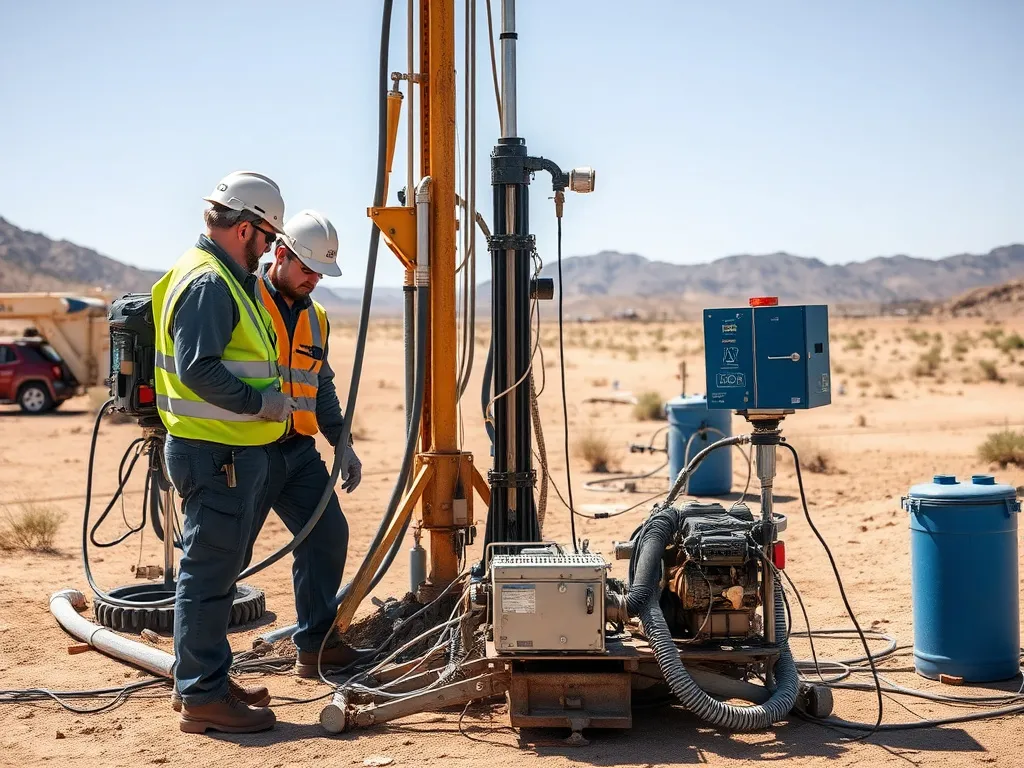 to protect people and equipment throughout the process.
Step 1: Preparation and Planning
Compile well history, maintenance logs, and known issues. Define objectives and target parameters such as flow rate and pressure. Review construction details, lithology from drilling logs, and the pump curve to set the expected duty point—the reference for interpreting deviations during testing.
Step 2: Equipment Setup
Calibrate flow meters, pressure gauges, and water level sensors, and confirm straight-run requirements. Check transducer zeroing and ensure discharge piping, valves, and sampling ports are leak-free and correctly sized to prevent artificial head losses that could mask true performance.
Step 3: Conduct the Test
Operate the pump across conditions, recording flow, pressure head, and drawdown at set intervals. Run a step-drawdown series, then a constant-rate and recovery phase. Maintain steady discharge at each stage and use automatic shutdown thresholds for low water level or high motor temperature to safeguard the asset.
Step 4: Data Analysis
Analyze results for efficiency and irregularities. Calculate specific capacity and energy intensity (kWh per cubic meter), plot head versus flow against manufacturer curves, and evaluate wire-to-water efficiency to locate hydraulic, mechanical, or electrical losses. Compare with past tests to track deterioration and set priorities.
Step 5: Implement Adjustments and Recommendations
Translate findings into actions—repairs, setting changes, or maintenance—and document outcomes for future reference. Typical measures include screen cleaning and redevelopment, disinfection and chemical treatment for scale or biofouling, impeller refurbishment, VFD tuning, surge protection, and adjusted pumping schedules aligned with aquifer recovery and energy tariffs.
Case Study: Successful Pump Testing in Saudi Arabia
Hajjan Drilling tested a well serving a major industrial project in Saudi Arabia and found efficiency losses from sediment build-up and a faulty pressure valve. After rehabilitation and valve replacement, efficiency improved by about 20%, cutting energy use and boosting reliability. The team reset pump depth and added a VFD to hold constant discharge pressure as aquifer levels varied, reducing energy from roughly 1.2 to 0.95 kWh per cubic meter. A verification test confirmed near-nameplate performance, while added telemetry enabled remote monitoring, fewer start–stop cycles, longer motor life, and a payback within the same fiscal year.
Best Practices for Sustainable Water Well Operations
Adopt these pump-testing practices as part of asset management so wells remain dependable through seasonal peaks and long-term demand shifts.
- Scheduled Testing: Set a regular schedule, timed before summer peaks and after major rainfall or sandstorms, to keep baselines current and systems running smoothly.
- Training and Education: Invest in ongoing staff training on pump curves, data loggers, and electrical and confined-space safety so teams respond quickly and correctly.
- Quality Equipment: Use reliable, well-calibrated meters and level sensors, with measurement redundancy where feasible, to ensure accurate data collection and analysis.
- Comprehensive Maintenance: Pair testing with inspections and cleaning. Include rehabilitation, disinfection, corrosion monitoring, and water quality sampling so mechanical and hydrogeological issues are addressed together.
Compliance and Legal Considerations
In Saudi Arabia, strict regulations protect scarce water. Regular pump testing supplies the documentation needed for compliance and shows commitment to sustainability. Partnering with firms like Hajjan Drilling helps navigate local rules and avoid penalties. Calibrated instruments, signed test reports, and organized records support permit renewals, abstraction caps, and reporting requirements with a defensible audit trail.
Conclusion: Maximizing Water Well Efficiency through Pump Testing
Pump testing is central to sustainable, efficient water supply. Structured routines prevent disruptions, cut costs, and satisfy regulatory and operational demands. By detecting wear and adapting to aquifer changes, companies like Hajjan Drilling equip clients for reliable peak performance, better energy use, and longer asset life—benefits that compound year after year.
In Saudi Arabia, partnering with experienced contractors such as Hajjan Drilling drives efficiency, sustainability, and compliance. With smarter sensors, remote monitoring, and predictive analytics, water well management is advancing rapidly—and rigorous pump testing remains the foundation for resilient, long-term groundwater stewardship.