
Future-Ready Offshore Drilling Tech: A Closer Look at Technological Advancements
In offshore drilling, technology is redefining efficiency and safety. Operators are adopting advanced tools to stay competitive amid environmental, economic, and regulatory pressures. Volatile prices, deeper reservoirs, and harsher seas demand solutions that deliver more with fewer people at risk. Tasks that once needed large crews and months of planning can now be executed in weeks by smaller teams using automation and real-time support. The payoff is fewer interruptions, faster learning, and more consistent wells. This overview highlights recent progress, near-term impacts on efficiency, and emerging trends, showing how integrated digital and electromechanical systems are reshaping project economics and risk across the life of field.
Recent Breakthroughs in Offshore Drilling Technology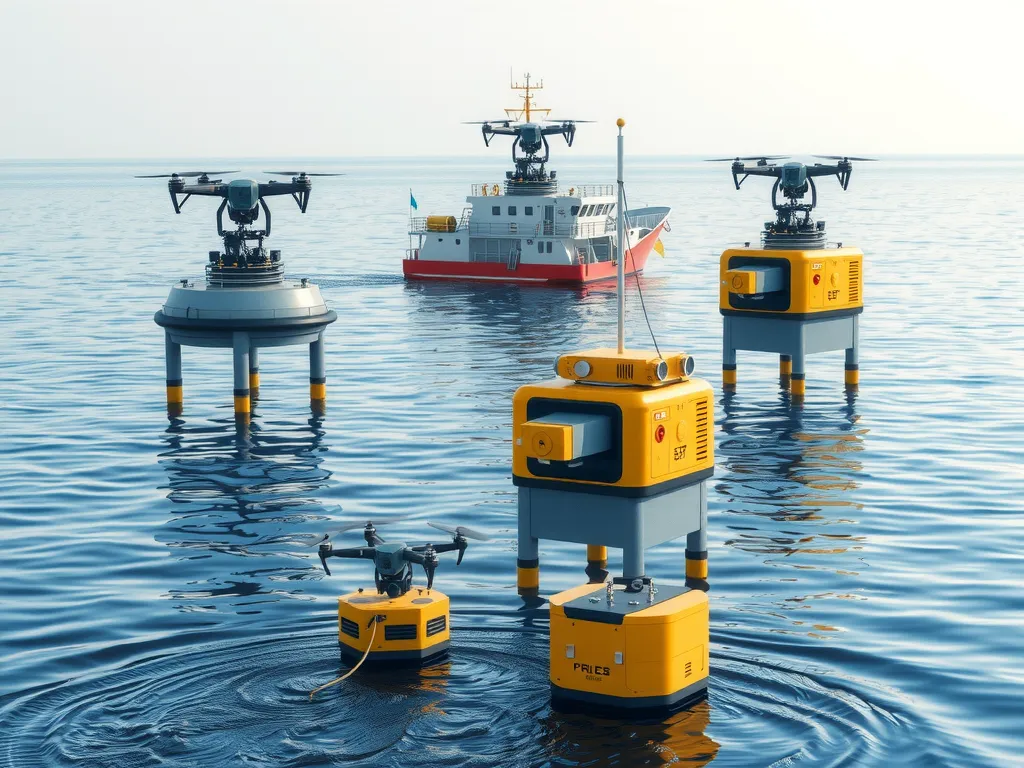
Offshore drilling has advanced quickly in accuracy, safety, and cost control. A report by
Ocean News & Technology
notes a decisive shift toward autonomous platforms—uncrewed surface vehicles (USVs) and autonomous underwater vehicles (AUVs)—for surveys and data collection. These systems reduce reliance on large, fully crewed vessels, lowering costs and risk while modernizing survey workflows. Outfitted with multibeam echosounders, synthetic aperture sonar, high-resolution cameras, and sometimes laser or LIDAR payloads, they run long missions with minimal intervention. Persistent USV patrols and AUV pipeline inspections enable continuous asset awareness rather than periodic snapshots. By fusing these data with satellite imagery and metocean feeds, operators build near-real-time seabed and infrastructure mosaics to guide drilling location selection, riser placement, and mooring design—cutting days at sea, stabilizing schedules, and improving decisions in changing conditions.
Autonomous Operations and Remote Supervision
Cloud-based control and remote operations centers, as described by
Ocean News & Technology
, mark a step change. Onshore experts oversee work in real time, reducing offshore headcount while enabling parallel tasks. High-availability networks—fiber to shore where practical and low‑Earth‑orbit satellites elsewhere—stream drilling parameters, video, and equipment health at useful refresh rates. Edge computing filters and compresses data, enabling human‑in‑the‑loop autonomy: algorithms handle routine sequences, and specialists step in when thresholds are breached. Standardized remote “playbooks” and digital shift handovers bring consistency and let expertise follow the sun. As remote operations scale, cyber resilience, role‑based access control, and fail‑safe local modes are as vital as traditional PPE, ensuring autonomy remains productive and secure.
Digitalization and Data Analysis
Digitalization—especially big data and machine learning—is delivering predictive insights. As
Offshore Magazine
explains, digital twins let teams model scenarios and anticipate issues before they arise. Beyond planning, twins mirror day‑to‑day behavior of BOPs, top drives, mud pumps, and dynamic positioning systems, ingesting sensor streams to forecast wear and catch anomalies early. ML models optimize rate of penetration, weight on bit, and mud properties in real time to reduce nonproductive time and stuck‑pipe risk. Historical lessons, once scattered in reports, now live in searchable knowledge graphs that surface context‑specific guidance to drillers and supervisors. Coupled with probabilistic simulations, these tools enable “what‑if” tests—on kick detection thresholds, tripping speeds, or casing programs—before committing expensive rig time, producing better outcomes with fewer surprises.
Effects on Operational Efficiency
Efficiency underpins profitability offshore, and new technology is central to achieving it.
Offshore Magazine
notes that all‑electric systems cut the infrastructure and costs tied to hydraulics while delivering on‑demand power and real‑time data for better well control. Electrified BOPs and valves simplify layouts, shrink deck footprint, and avoid hydraulic leaks that halt operations. Modular power distribution with variable‑frequency drives stabilizes loads from heave compensation and rotary equipment, improving fuel use on diesel‑electric rigs. Pairing with energy storage enables peak shaving, reducing generator hours and maintenance. Standardized software interfaces shorten commissioning and speed return to drilling after service. Together, these changes compress critical paths—from rig‑up and testing to section drilling and completion—improving consistency and enabling more wells per season without sacrificing safety.
Lowered Environmental Impact
With rising environmental expectations, the sector must lower its carbon footprint. Electrification and cleaner technologies help meet regulations and align with sustainability goals. Electric well control reduces emissions and improves precision in deepwater operations. Quieter electric drives also cut underwater noise, benefiting marine life. Autonomous monitoring platforms continuously sample water quality and detect minute hydrocarbon traces for rapid response, limiting exposure. Some operators are piloting hybrid power with battery packs or offshore wind imports to reduce fuel burn under low loads. Better positioning and geospatial planning lessen seabed disturbance during anchoring and pipelay, while digital reporting automates verified emissions and discharge logs for regulators and stakeholders.
Workforce and Safety Enhancements
Robotic automation removes people from high‑risk zones and boosts safety. Advanced sensors and automated systems deliver real‑time monitoring and rapid feedback to prevent incidents. Automated pipe handling, iron roughnecks, and drill‑floor robots keep personnel out of red zones while maintaining connection quality. Wearables alert supervisors to heat stress or fatigue, and computer vision flags unsafe proximities before incidents occur. Digital permit‑to‑work platforms connect barriers, isolations, and gas detection in a single view, making deviations visible in time to act. Training has improved, too: immersive simulators and augmented‑reality guides let crews practice rare but critical procedures until muscle memory forms. The result is fewer recordable incidents and higher confidence to manage complex operations.
Future Trends and Challenges
Offshore drilling is set for further evolution as innovation and regulation advance. Market cycles demand capital discipline, and projects must now compete on emissions intensity as well as breakeven price. New frontiers—ultra‑deepwater, high‑pressure/high‑temperature zones, and remote basins—require tighter integration of subsurface modeling, well design, and marine operations. Growing decommissioning obligations create openings for the same autonomous tools used in development to characterize legacy infrastructure and plan safe plug‑and‑abandon campaigns. Crossovers with carbon capture and storage, subsea tiebacks, and electrified production will shape drilling choices for decades.
Regulatory and Compliance Issues
As
OilPrice.com
notes, regulatory approval can slow adoption. Requirements vary by region, affecting speed and cost‑effectiveness. Stakeholders must navigate these complexities to maintain compliance and sustainability. Certification for autonomous systems, cyber‑secure control networks, and all‑electric well control often requires extra testing, documentation, and proof of performance. Functional safety expectations, environmental impact assessments, and class society rules frequently intersect, so early engagement with authorities aligns trial scopes and acceptance criteria. Data sovereignty and privacy rules shape where and how operational data is processed in the cloud, influencing architecture choices. Leading operators build “compliance by design,” embedding standards, traceability, and audit trails from the outset rather than treating approvals as a final hurdle.
Technological Integration
Integrating diverse systems remains a major challenge. Operators need compatibility across digital platforms, legacy hardware, and new tools to capture full value. As the sector moves toward integrated systems, standardized protocols and targeted training are essential. Legacy PLCs and SCADA platforms must exchange data with modern analytics through open interfaces such as OPC UA or lightweight publish–subscribe patterns like MQTT. A reliable “digital thread” from reservoir models to rig control and post‑well analysis depends on disciplined data governance—consistent tags, time synchronization, and rich context metadata. Without this foundation, advanced analytics stall at pilot scale. Change management matters, too: crews need clear procedures when algorithms recommend parameter changes, and integrated simulators should validate control logic before deployment. Avoiding vendor lock‑in, choosing modular components, and maintaining shared testbeds help organizations iterate faster while preserving long‑term flexibility.
Looking Ahead: Preparing for a Sustainable Future
As the industry evolves, innovation remains central. Companies investing in sustainable, adaptable technologies will better meet challenges and seize opportunities. Strategic planning, flexibility, and digital tools lay the groundwork, as noted by studies on
ResearchGate
.
A portfolio approach—testing multiple concepts, scaling the best, and retiring the rest—derisks transformation. Clear value cases should tie technology to outcomes such as lower emissions per barrel, reduced nonproductive time, and faster time to first oil. Cross‑sector partnerships with robotics, maritime, and cloud providers accelerate learning, while rigorous cyber and safety management govern the pace of change. Equally important is the human element: reskilling programs, competency frameworks, and inclusive communications keep the workforce engaged and ready to leverage new tools. Designing systems to be modular and upgradable preserves optionality as standards and best practices mature.
In conclusion, the future of offshore drilling carries challenges but also significant opportunity for operators that adopt advanced, sustainable practices. As global energy demand grows, leaders will be those who innovate and adapt—moving remote operations, electrification, autonomous inspection, and integrated data from pilots to mainstream practice. These capabilities are already reshaping cost structures and raising the bar on safety. Organizations that pair disciplined governance with continuous improvement will deliver reliable energy with a smaller footprint, resilient operations, and a workforce equipped for the complex oceans ahead.