
Tech Innovations Changing Drilling Operations in Saudi Arabia
Saudi Arabia has long led the energy sector, and water‑well drilling remains vital. As the field advances, supporting tech is rapidly evolving. This article spotlights innovations reshaping drilling in the Kingdom—delivering higher efficiency, safer operations, and greater sustainability. Beyond oil and gas, reliable groundwater underpins population growth, agriculture, mining, and industry across arid regions. These needs span remote communities and major development zones from the Rub’ al Khali to the northern plateaus. Modern tools help teams map aquifers accurately, site wells with confidence, and work in harsh desert conditions while using fewer resources. Combined with local capacity building and partnerships with global equipment makers, these advances align with Vision 2030 and reinforce long‑term water security.
Leading Technologies in Drilling Operations
Modern rigs integrate digital systems that feed real‑time data for smarter decisions. Automated drilling control and GPS‑guided positioning speed work and tighten tolerances. High‑frequency downhole sensors stream weight‑on‑bit, torque, and vibration to control rooms, where algorithms tune parameters within safety limits. Rotary steerable and measurement‑while‑drilling tools keep trajectories on target through fractured basalts and deep sandstones. Digital twins mirror rig and well conditions to test next steps before execution, while SCADA dashboards unify data from pumps, mud, and power trains so supervisors spot anomalies early. Common data standards let service companies plug in quickly, while automated reporting shortens handovers. Integration with maintenance systems links drilling events to asset histories, cutting invisible lost time and improving consistency across crews.
Increasing Efficiency with Advanced Methods
Advanced methods have sharply lifted efficiency. Extended‑reach drilling accesses distant targets, minimizing extra well sites and surface impact. Multi‑well pads and batch sequences cut rig moves and standardize repetitive work. Optimized BHAs with durable PDC cutters extend bit life and raise rate of penetration. Casing‑while‑drilling and improved pipe handling reduce nonproductive time. With high‑speed telemetry, geosteering lands wells precisely in target layers, boosting yield and limiting rework. SOPs encoded in rig HMIs and checklists further reduce variability between crews. For municipal and farm projects, these gains mean faster schedules, fewer remote logistics runs, and earlier water delivery.
Safety Improvements through Innovation
Safety remains paramount. AI‑driven predictive maintenance tracks equipment health and warns before failures. Remote monitoring enables centralized oversight, reducing on‑site headcount and exposure. Automated catwalks, iron roughnecks, and pipe‑handling robots limit manual lifting and pinch‑point risks. Wearables track location and vital signs, issuing heat‑stress alerts and speeding musters. Augmented‑reality headsets guide step‑by‑step tasks, cutting maintenance errors. Digital permits‑to‑work, geofenced exclusion zones, and continuous camera analytics embed safety into daily routines rather than only during emergencies. Behavior‑based insights flag risky patterns before they escalate.
Environmental Factors in Modern Drilling
Environmental performance is a parallel priority. Precision drilling targets only what’s needed, cutting waste and land disturbance in step with Vision 2030. Advanced water‑management practices promote careful use of scarce supplies. Closed‑loop mud systems, improved cuttings handling, and low‑toxicity fluids limit contamination. Pad layouts and smarter logistics trim truck traffic. Hybrid power—grid, gas gensets, and site solar—reduces fuel burn and emissions. Continuous monitoring of drawdown, recharge, and salinity, supported by satellite and ground sensors, guides pumping strategies that protect aquifers and sustain community trust. Baseline surveys and post‑drill audits verify compliance and inform continuous improvement.
Future Outlook and Global Trends
The outlook is strong. Deeper integration of IoT and machine learning will raise efficiency and resilience in harsh climates. Edge computing will keep analytics running despite intermittent links, while private 5G and satellites maintain reliable data flows between desert sites and city control rooms. New materials—corrosion‑resistant tubulars and high‑temperature elastomers—will extend service life in saline or abrasive formations. Drones and autonomous rovers will assist with scouting, inventory, and perimeter checks, freeing crews for higher‑value work and shortening readiness‑to‑spud times. AI copilots will suggest parameter changes and flag anomalies, accelerating learning loops.
Aligning with global trends, Saudi Arabia is setting a regional benchmark for advanced, sustainable drilling. Interoperable data standards will let rigs, sensors, and software from multiple vendors work seamlessly, improving benchmarking and vendor choice. Local talent pipelines—technical institutes, universities, and apprenticeships—ensure systems are run by a skilled Saudi workforce. Regional benchmarking across fields and basins will sharpen capital allocation. By sharing best practices and exporting homegrown expertise, the Kingdom can fortify supply chains and speed the shift to smart, sustainable water infrastructure.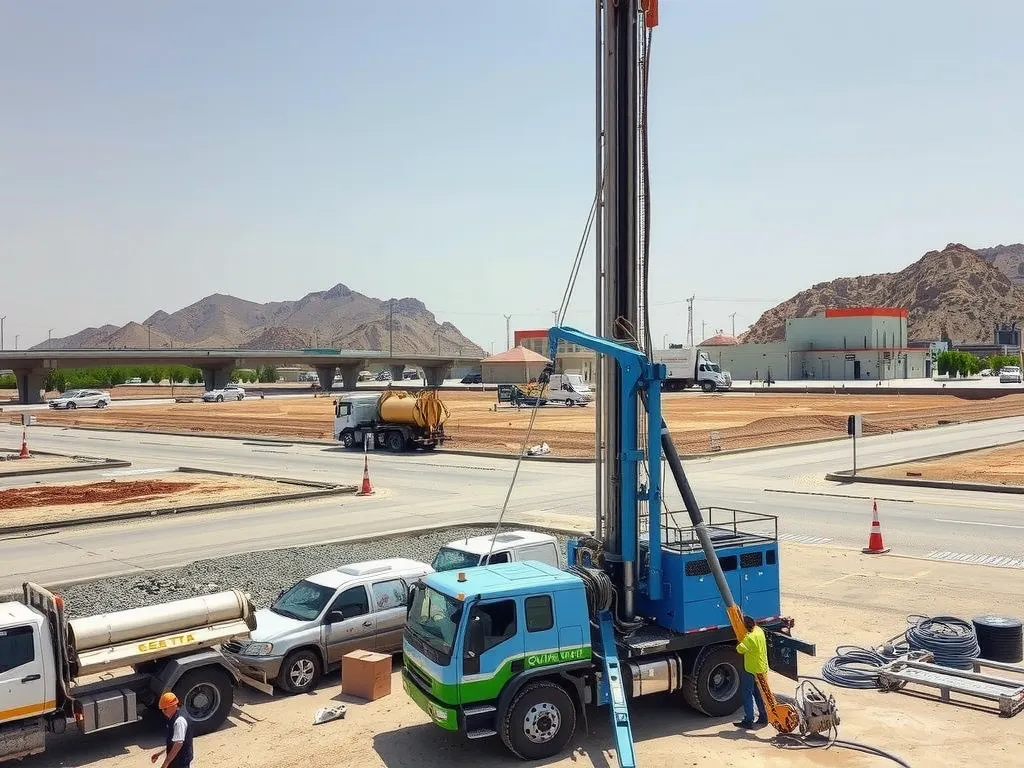
Conclusion
Technology now sits at the core of drilling in Saudi Arabia. Embracing these tools raises efficiency, safety, and environmental performance. Continued investment will sustain leadership in water‑well development and advance Vision 2030. The most effective operators pair digital tools with disciplined execution—clear operating envelopes, continuous upskilling, and proactive maintenance. With collaborative pilots, transparent metrics, and community engagement, the sector can deliver reliable wells faster, at lower cost and with a lighter footprint—meeting today’s needs while protecting groundwater for generations. That discipline turns data into durable performance.