
Shaping the Future: New Offshore Drilling Innovations in the Middle East
Offshore drilling sits at the forefront of energy technology. As demand and environmental scrutiny rise, new tools are reshaping operations—especially in Middle Eastern waters. From the shallow, high‑salinity Arabian Gulf to the deeper, more turbulent Red Sea, the region has become a living laboratory for testing and scaling next‑generation practices. National oil companies and international partners are aligning technical ambition with sustainability goals, showing that targeted innovation can secure resilient supply while delivering measurable environmental gains.
Current Trends in Offshore Drilling Technologies
Offshore drilling is evolving fast in pursuit of efficiency and sustainability. AI and real‑time analytics now anchor decision‑making. Modern rigs with embedded downhole sensors stream torque, weight on bit, vibration, and mud‑system data via secure rig‑to‑shore links for edge control and cloud‑scale pattern recognition
farmonaut.com
. Predictive models flag stuck‑pipe or pump‑failure risks hours in advance, cutting non‑productive time and fuel burn. Open data standards and interoperable dashboards bring geoscientists, drillers, and HSE teams onto the same screen, shortening feedback loops, improving well placement, and maintaining strong cybersecurity.
Directional and horizontal drilling further expand access to complex reservoirs.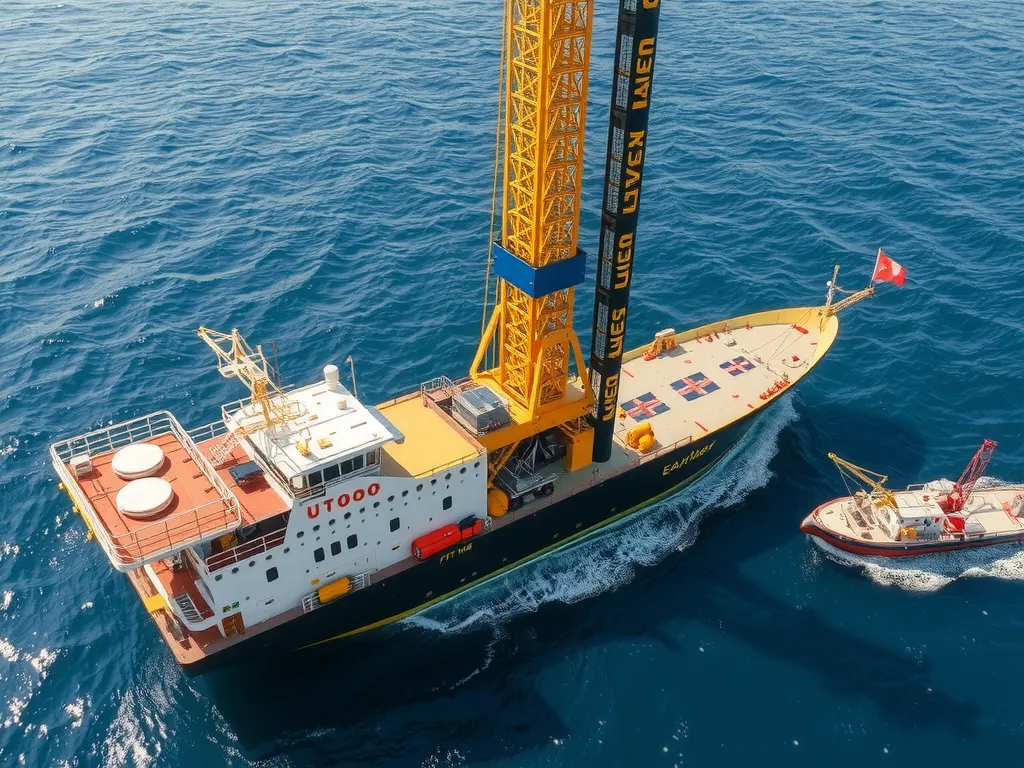 In Saudi fields and beyond, rotary‑steerable systems and logging‑while‑drilling tools feed real‑time gamma, resistivity, and acoustic data to geosteering teams, keeping the bit in thin, high‑value zones over long laterals
oreateai.com
. Multilateral wells reduce surface locations and seabed footprint, while extended‑reach drilling from existing platforms defers new structures, lowering capital needs and disturbance to sensitive marine habitats.
Benefits of Technological Innovations
Advanced technologies are delivering clear gains in efficiency, safety, and sustainability. AI‑driven optimization and predictive maintenance reduce downtime and sharpen drilling precision, accelerating campaigns while supporting emissions goals. Automated pipe handling and iron roughnecks limit human exposure in high‑risk zones. Algorithmic control steadies vibration and stick‑slip, protecting tools and reducing re‑runs. Better engine loading cuts fuel use, and improved hole quality lowers the volume of drilling fluids and additives, shrinking the environmental footprint per well.
Top drive systems exemplify these gains. They offer precise control across varied scenarios while reducing environmental impact, and companies like NorDrill provide tailored solutions that elevate safety and performance
offshore-mag.com
. Newer top drives pair efficient motors with variable‑frequency drives and advanced software to smooth torque, prevent over‑pull, and integrate with managed‑pressure drilling. Regenerative braking recovers energy during hoisting, condition‑based monitoring extends maintenance intervals, and modular designs speed retrofits on legacy jackups and semisubmersibles—spreading best‑in‑class safety across mixed fleets.
Challenges in Middle Eastern Waters and Potential Solutions
Middle Eastern offshore work faces extreme heat, complex geology, corrosive high‑salinity waters, sour gas (H₂S/CO₂), and high‑pressure, high‑temperature intervals in deep carbonate sequences. Seasonal winds, narrow weather windows, and crowded shipping lanes add logistical complexity. AI‑assisted automation and real‑time analytics strengthen precision and situational awareness. Managed‑pressure drilling stabilizes fragile formations; corrosion‑resistant alloys protect completion strings; closed‑loop mud plants minimize handling risks; and integrated digital twins forecast weather, rig power needs, and wellbore behavior together, guiding safer, more consistent execution.
Sustainability is advancing in parallel.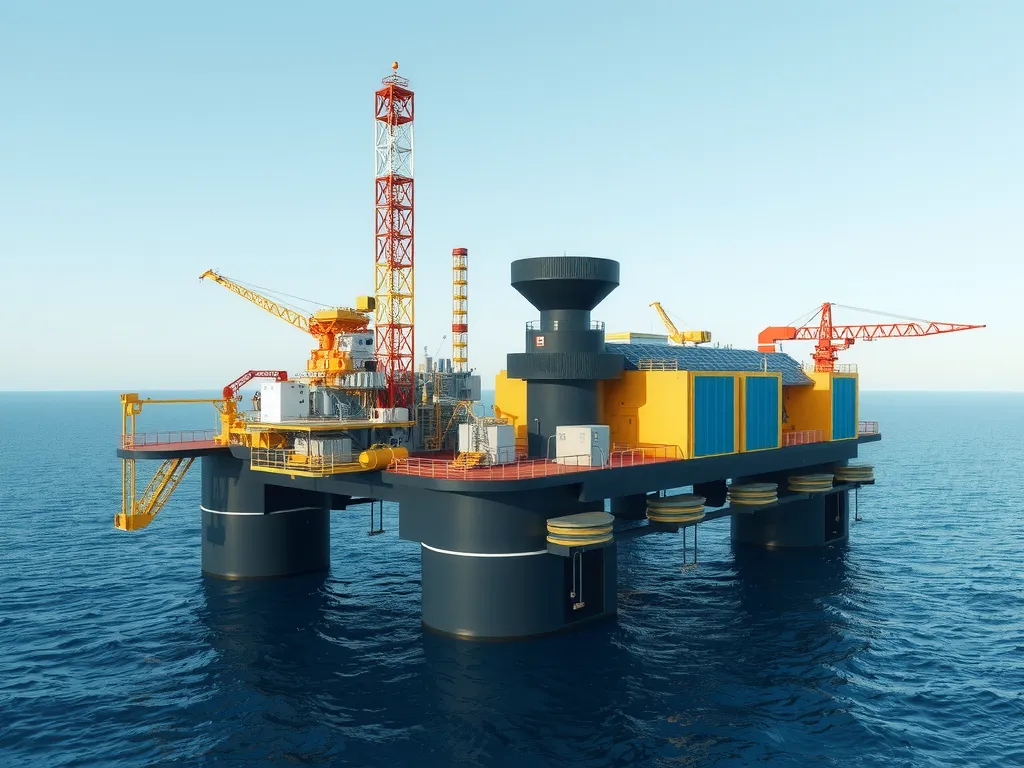 Hybrid power systems blend high‑efficiency gensets with battery energy storage to shave peaks and capture transients during tripping cycles. Flare‑reduction packages and vapor recovery units curb routine emissions, while continuous methane monitoring—via optical imaging, fixed sensors, and drone overflights—builds transparency. Produced‑water treatment and reinjection protect marine ecosystems, biodegradable base oils and improved containment raise HSE standards, and where grids allow, partial electrification from shore further decarbonizes operations without sacrificing availability.
Case Studies from the Middle East
These advances are visible across regional projects. Saudi Aramco—long a leader in technology adoption—continues to deploy digital drilling and high‑spec equipment to enhance outcomes
oilprice.com
. Across the Gulf, partnerships among national operators, service firms, and OEMs are accelerating pilots into production for analytics, jackups, and subsea integrity monitoring. Local‑content programs are building regional manufacturing and maintenance hubs that shorten supply chains, improve uptime, and spread standardized best practices across fields with similar geology and varied regulations.
In one initiative, Aramco’s use of digital twins and AI has yielded notable cost savings and stronger sustainability metrics.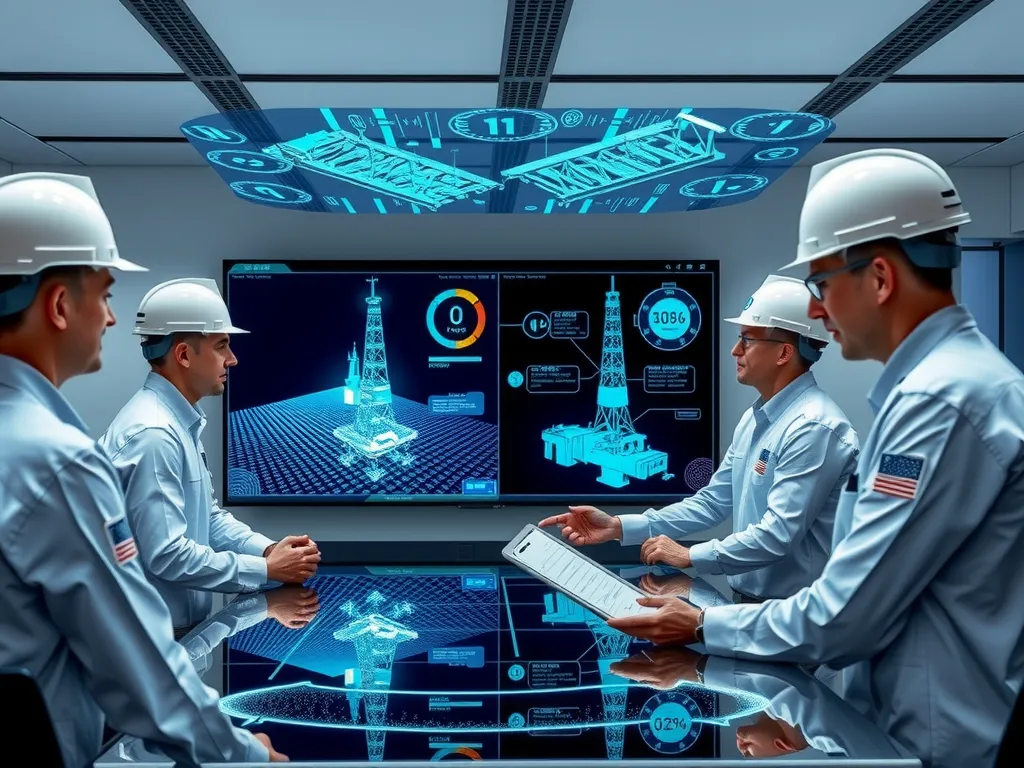 These twins synchronize subsurface models, equipment health, and logistics in a single view, enabling scenario tests—such as shifting casing points or mud weights—before decisions reach the rig. Remote operations centers monitor multiple units simultaneously, providing specialist support on demand so lessons from one well carry quickly to the next. The result is tighter schedules, reduced materials waste, and clearer reporting against ESG targets.
Interviews with Technology Experts
Expert interviews underscore that technology delivers best when paired with strong people and processes. Priorities include cross‑functional collaboration among geoscience, drilling, operations, and HSE; upskilling that turns domain specialists into confident analytics users; and robust data governance for quality, lineage, and cybersecurity. Standardized workflows and clear decision rights help innovations scale quickly and safely.
Dr. Ahmed Al-Mutlaq
, a leading energy‑technology researcher, notes that “the key to advancing offshore drilling lies in data‑driven decision‑making and embracing digital transformation.” His work with AI‑driven automation shows how reinforcement‑learning approaches can continuously tune weight‑on‑bit, rotary speed, and mud properties to maximize rate of penetration within safe envelopes. In parallel, anomaly‑detection models scan sensor streams for signatures that precede kicks or equipment wear, prompting measured responses long before thresholds are breached. For Dr. Al‑Mutlaq, real‑time intelligence paired with disciplined execution is redefining how teams plan and drill each section.
Similarly,
Jane Morris
, an offshore engineering specialist, observes that “technological advancements have bridged the gap between environmental responsibility and economic feasibility, making offshore drilling more sustainable and profitable.” She emphasizes life‑cycle thinking—designing for reliability, modular refurbishment, and eventual decommissioning—alongside up‑front cost. Retrofitting legacy rigs with efficient top drives, automation, and hybrid power can yield meaningful emissions reductions without full fleet replacement. Morris also highlights the value of early engagement with regulators and coastal stakeholders to align on monitoring, biodiversity safeguards, and transparent reporting that sustains a durable license to operate.
Conclusion: The Way Forward
Looking ahead, the convergence of technology, innovation, and sustainability will keep shaping Middle Eastern offshore drilling. Expect steady advances in automation—robotic pipe handling, AI‑assisted geosteering, and remote support for routine tasks—paired with rigorous human‑in‑the‑loop oversight for critical decisions. Standardized data models and interoperable control systems will make multi‑operator collaboration more seamless, spreading learning faster across basins and cutting duplicate engineering.
The innovations gaining momentum today position offshore drilling as both a mainstay of energy supply and a showcase of modern, responsible engineering. As projects integrate with carbon capture and storage, gas‑to‑power, and emerging hydrogen value chains, the region can deliver reliable energy with declining emissions intensity. Continued investment in workforce development, transparent performance metrics, and ecosystem partnerships will ensure that wellsite advances translate into durable societal value—aligning national priorities with global climate goals.