
AI Revolution in Water Well Drilling: Enhancing Efficiency and Strategy
In today’s rapidly evolving technological environment, Artificial Intelligence (AI) is transforming industries worldwide, and water well drilling is no different. With over 45 years of continuous operations, Hajjan Drilling Company is leading the way in integrating AI into drilling, achieving higher efficiency and improved strategic abilities. Decades of field data, engineering expertise, and lessons learned from diverse terrains across the region now power intelligent systems that assist planners before a rig ever moves. Rather than replacing human judgment, AI augments it—synthesizing complex variables in seconds and presenting options that experienced teams can validate on the ground. The result is a more predictable, safer, and cost-effective operation, even in remote or environmentally sensitive areas where logistics and conditions can change rapidly.
Introduction to AI Technologies in Modern Drilling
AI has ushered in a new chapter of opportunities for the drilling industry. By using AI, companies can convert large amounts of geological and operational data into valuable insights, leading to better-informed decisions. These tools help streamline drilling, boost safety, and maximize resource usage. Datasets once considered too large or too disparate—such as satellite imagery, geophysical logs, historic pumping tests, soil conductivity, rainfall records, and real-time rig telemetry—are fused into a coherent picture that guides every stage from prospecting to production. In practice, this means fewer false starts, more successful completion rates, and tighter control over timelines and budgets.
Essential AI elements such as machine learning and predictive analytics automate routine tasks, evaluate underground conditions, and predict maintenance requirements, reducing downtime and boosting productivity. Supervised models can forecast drillability and aquifer characteristics based on past wells in similar formations, while unsupervised techniques reveal subtle patterns in noise-prone sensor feeds that humans might miss. Intelligent recommendations can support choices like bit type, weight on bit, and rotational speed, and digital twins simulate the well’s behavior under different scenarios to stress-test plans before execution. Together, these capabilities shorten decision cycles, improve consistency, and free engineers to focus on higher-value design and risk management.
Benefits of Data-Driven Decision-Making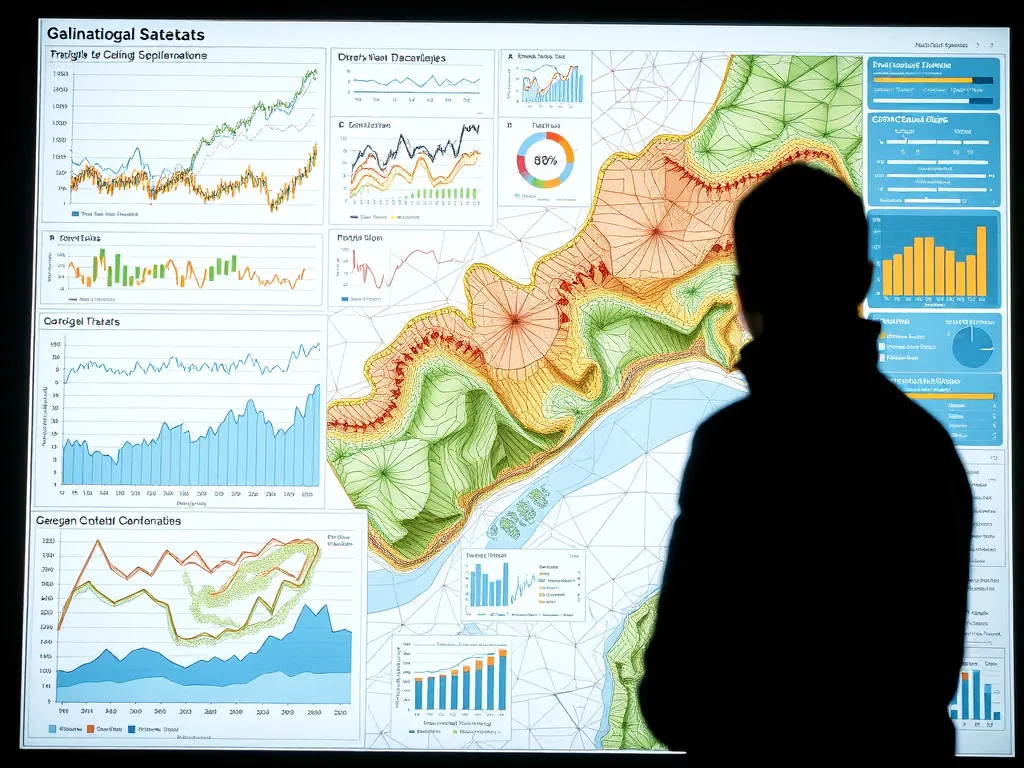
AI’s data-processing strength makes it crucial for reservoir mapping and drilling intelligence, areas already extensively explored by competitors. By examining historical data, geological trends, and current conditions, these technologies identify ideal drilling spots. This enables accurate decisions that enhance well placement and field development. For groundwater-focused projects, AI-assisted aquifer characterization highlights high-conductivity zones, flags potential salinity encroachment, and evaluates confining layers and recharge potential, all while accounting for local land use and long-term demand projections. The outcome is a portfolio of drill sites prioritized by probability of success, expected yield, and lifecycle cost.
Combining AI with advanced sensors and IoT devices supports ongoing data gathering and analysis, optimizing drill site operations and ensuring equipment runs smoothly. This predictive maintenance can substantially reduce costs and enhance operational efficiency. Networked gauges monitor vibration, temperature, pressure, and motor current; flowmeters and water-quality probes track turbidity, conductivity, and pH; and edge computing filters signals to trigger alerts even when connectivity is limited. Early warnings about bearing wear, pump cavitation, or scale buildup allow teams to schedule interventions during planned windows, minimize truck rolls, and extend asset life. In the aggregate, these small, timely actions translate into higher uptime, steadier water delivery, and better stewardship of critical infrastructure.
Case Studies of Successful AI Integrations in Water Well Drilling
Across Saudi Arabia, Hajjan Drilling Company has applied AI-driven solutions with impressive results. For instance, the company’s collaboration with Saudi Aramco involves using AI technologies to proactively monitor and maintain over 500 water wells. Operating at this scale requires a secure, vendor-neutral architecture that integrates legacy SCADA with modern analytics while respecting cybersecurity best practices. The initiative has also created structured pathways for knowledge transfer—codifying expert heuristics into algorithms and dashboards so that new engineers can benefit from decades of field wisdom from day one.
A notable project utilized AI for real-time monitoring, allowing engineers to foresee issues before they arise, cutting down on reactive maintenance and costly repairs. This proactive method has provided measurable efficiency improvements, saving time and money while minimizing environmental impact. Field teams receive prioritized work orders when models detect drifting performance, and site supervisors can see forecasted outcomes if a repair is deferred versus executed immediately. Integration with weather data and access logistics further refines scheduling, reducing unnecessary site visits and supporting safer, daylight-hour operations. The ripple effects include stabilized water quality, fewer emergency shutdowns, and a significant reduction in unplanned equipment replacements.
AI applications have also been included in groundwater operation projects, where predictive analytics guide sustainable water extraction methods, supporting aquifer longevity and environmental balance. By aligning pumping schedules with modeled recharge cycles and seasonal demand, operators can maintain drawdown within pre-set thresholds and avoid overextraction. Scenario planning helps municipalities and industrial users evaluate trade-offs between short-term peak output and long-term aquifer health, while sustainability indicators—such as energy per cubic meter and carbon intensity—provide transparent metrics for continuous improvement. These practices strengthen water security for communities and industries, bolstering resilience in the face of climate variability.
Challenges and Opportunities of AI Implementation
While the benefits of AI are substantial, implementing these technologies presents challenges. Initial costs and the need for specialist personnel can be a hurdle for smaller companies. Furthermore, the vast amount of data requires robust systems capable of effectively processing and interpreting results. Organizations must also address data quality and governance—standardizing formats, ensuring accurate metadata, and maintaining calibrated sensors to prevent model drift. Legacy systems may not easily interface with cloud platforms, and remote sites can face intermittent connectivity, necessitating smart edge solutions. Change management is equally important: teams need training, clear roles, and confidence that AI augments rather than displaces their expertise.
Despite these hurdles, the opportunities are vast. As AI systems become more advanced, they will provide even more accurate insights, making strategic drilling decisions highly precise. Companies that adopt AI will lead future innovations, setting standards for energy efficiency and operational excellence. Modern MLOps practices—covering model versioning, bias checks, and continuous monitoring—will make deployments more reliable and auditable. Interoperability standards and open data schemas can reduce vendor lock-in and accelerate ecosystem growth. Most importantly, human-in-the-loop workflows keep engineers at the center, using AI recommendations as decision support while preserving accountability, safety, and regulatory compliance.
Future Implications for the Industry
AI’s extensive capabilities suggest a future where drilling is more efficient, environmentally friendly, and strategically wise. As technologies progress, AI will evolve to enable automated drilling systems and improved carbon capture technologies, playing a crucial role in achieving emission targets. In practical terms, this points toward closed-loop control systems that continuously adjust drilling parameters for optimal penetration and borehole stability, autonomous site navigation that minimizes surface disturbance, and adaptive energy management that prioritizes lower-emission power sources. Coupled with satellite monitoring and drone-based inspections, operators will maintain a near-real-time environmental picture to safeguard habitats and comply with evolving regulations.
The potential for AI-driven systems to connect digital tools with physical equipment opens new paths for industry growth. These innovations will guide companies toward smarter, more effective, and more sustainable drilling worldwide. Digital twins of entire wellfields will synchronize with enterprise planning tools, inventory systems, and workforce schedules, enabling “what-if” analyses that balance cost, risk, and sustainability. Augmented reality can assist technicians during maintenance, overlaying AI-generated instructions on equipment to reduce error rates and training time. As best practices scale across regions, the sector will benefit from shared benchmarks, faster learning cycles, and a more resilient, data-informed supply chain.
Conclusion
The AI revolution in water well drilling is transforming the industry, bringing efficiencies, strategic progress, and competitive advantages. Companies like Hajjan Drilling are leading the charge by adopting AI and harnessing its transformative power in their operations. As AI continues to develop, it will set new benchmarks, support sustainable practices, and push technological frontiers. The most successful adopters will pursue a balanced roadmap: start with high-impact pilot projects, build robust data foundations, invest in people and partnerships, and scale thoughtfully with transparent metrics. By uniting human expertise with intelligent systems, the industry can deliver reliable water access, protect aquifers for future generations, and achieve superior outcomes for customers and communities alike.
For more insights into how Hajjan Drilling Company is spearheading this transformative shift, visit hwd.sa and explore our innovative solutions and expert capabilities. Discover case briefs, learn about our AI readiness workshops, or speak with our team about designing a roadmap tailored to your wells, your data, and your sustainability goals. The next era of water well drilling is here—intelligent, responsible, and ready to deliver.