
Into the Unknown: Exploring Earth’s Crust to Comprehend Our Planet’s Past
The Earth’s crust may be just a thin layer over a massive planet, but it holds essential clues to Earth’s extensive past. Whether it’s oceanic or continental, this outer layer is merely 5 to 70 kilometers thick—more like a delicate skin than a shell. Within it are marks of asteroids, formation processes, and tectonic activities that have shaped the landscape over billions of years.
From the Himalayan peaks to the deep-sea trenches of the Pacific Ocean, the crust is where people live, build societies, and study Earth’s geological record. Through drilling projects, seismic studies, and satellite imagery, scientists continue to uncover insights into the planet’s ancient beginnings and the processes still shaping it.
Understanding the crust matters not only for academic purposes but also for practical needs like natural resource management, hazard assessment, and energy production. This article examines how investigating Earth’s crust reveals its formation and evolution and how it supports the structures and functions of life on the planet.
The Formation of the Crust: A Historical Perspective
The formation of Earth’s crust was a key, multi-stage event in planetary history. Initially, Earth was completely molten, with extreme temperatures keeping surface material in liquid form. As the planet cooled, that molten layer solidified, creating different types of crust and helping the planet stabilize.
“Earth’s crustal evolution involves the formation, destruction, and renewal of the rocky outer shell at the planet’s surface.” -wikipedia.org
Understanding of Earth’s crust took shape with observations of plate tectonics, which governs the creation and destruction of large continental and oceanic plates. Scientists draw on clues—from zircon minerals to the behavior of seismic waves—to reconstruct the crust’s history and evolution, showing how tectonic activity sculpts the expanses and recesses of Earth’s surface.
Types of Crust and Their Characteristics
- Continental Crust:
Typically 30 to 70 km thick, it underlies most landmasses and is composed primarily of granite and other felsic rocks. - Oceanic Crust:
Thinner and denser, at about 5 to 10 km thick, composed mainly of basalt; it underlies oceans and is continually recycled back into the mantle.
This contrast between crust types reflects geological processes such as subduction, volcanic eruptions, and mountain building, illustrating the powerful forces that shape Earth’s topography.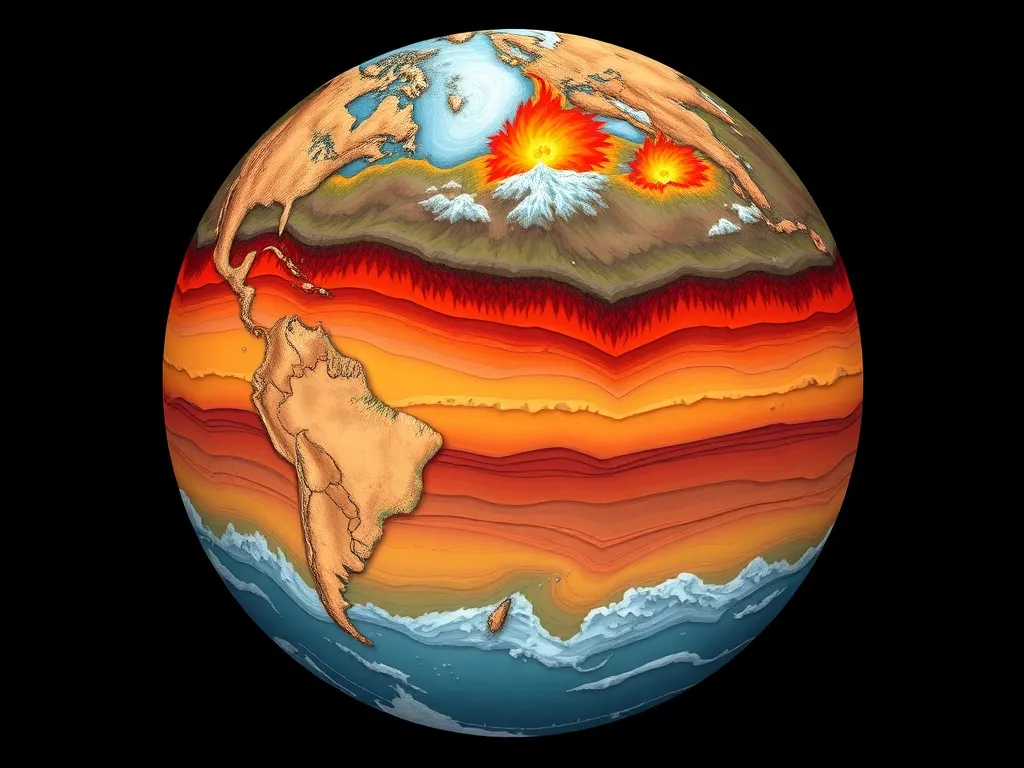
Exploring the Structure of the Crust
Thanks to advances in geoscience, researchers can now peer beneath the crust to investigate Earth’s architecture. Seismic waves generated by earthquakes allow scientists to detect and map subsurface structures, revealing differences in composition and density across layers below the surface.
“Seismic waves travel differently through various densities, allowing geologists to map the internal structure of the Earth.” -geologypoint.com
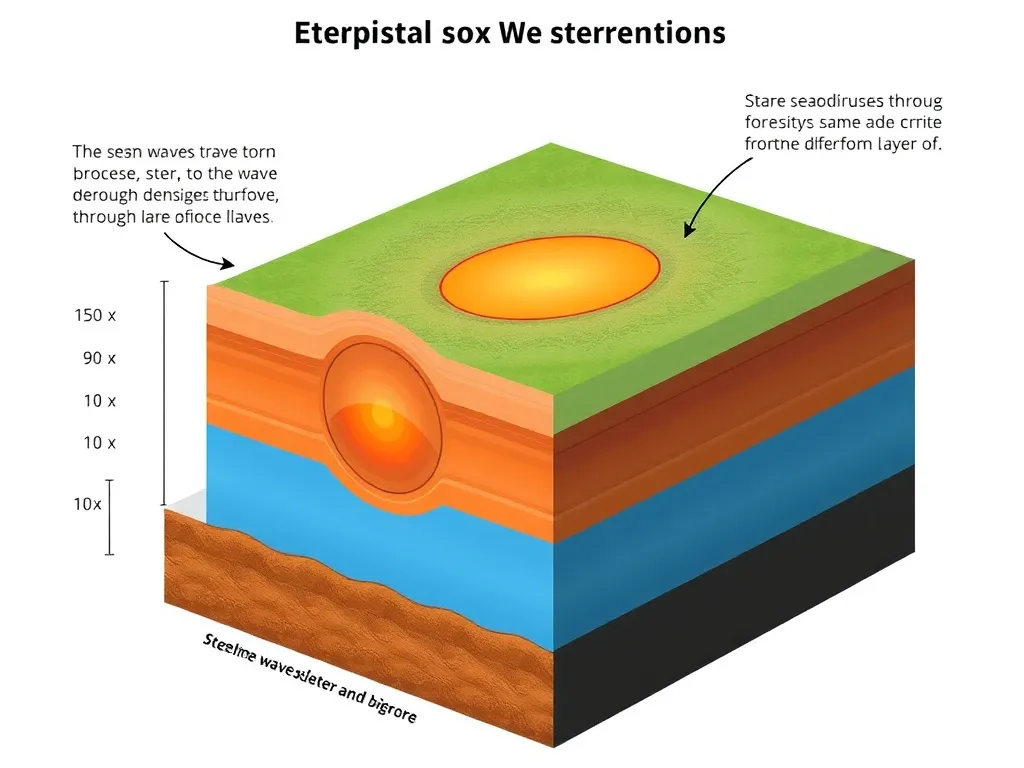
Exploration also includes drilling efforts such as the Kola Superdeep Borehole in Russia, an ambitious attempt that reached depths of over 12 kilometers. These projects collect samples and data from Earth’s crust and the broader mantle, enriching our overall understanding of geological evolution.
Technological Innovations and Their Impact
- Seismology:
Use of seismic data to gain insight into tectonic movements and predict seismic events. - Geophysical Imaging:
High-resolution imaging technology used to create detailed models of Earth’s subsurface. - Satellite Observation:
Utilization of satellite technology to capture large-scale geological shifts over time.
Developing and applying these tools is crucial for deepening our understanding of Earth’s internal processes and the related surface phenomena that affect both natural and human systems.
Analyzing the Impact of Geological Phenomena
Earth’s crust is central to many geological phenomena, including earthquakes, volcanic eruptions, and mountain formation. These events arise from the movements of tectonic plates and reveal how the crust drives Earth’s dynamics.
Case studies show that regions such as the Pacific Ocean’s Ring of Fire and the Himalayan tectonic zone are continually evolving landscapes, driven by movements in the crust and mantle. Such work is critical for understanding implications for biodiversity, climate, and human habitation.
Key Geological Processes
Several processes shape and reshape Earth’s crust. The pivotal ones include:
- Subduction:
One tectonic plate moves under another, leading to mountain formation and volcanic activity. - Rifting:
Plates pulling apart create new crust, leading to ocean basin formation. - Mantle Convection:
Heat-driven movement within the mantle that propels tectonic motion.
By understanding these processes, scientists can better predict geological changes and mitigate associated risks, such as earthquakes and volcanic eruptions, that threaten populations.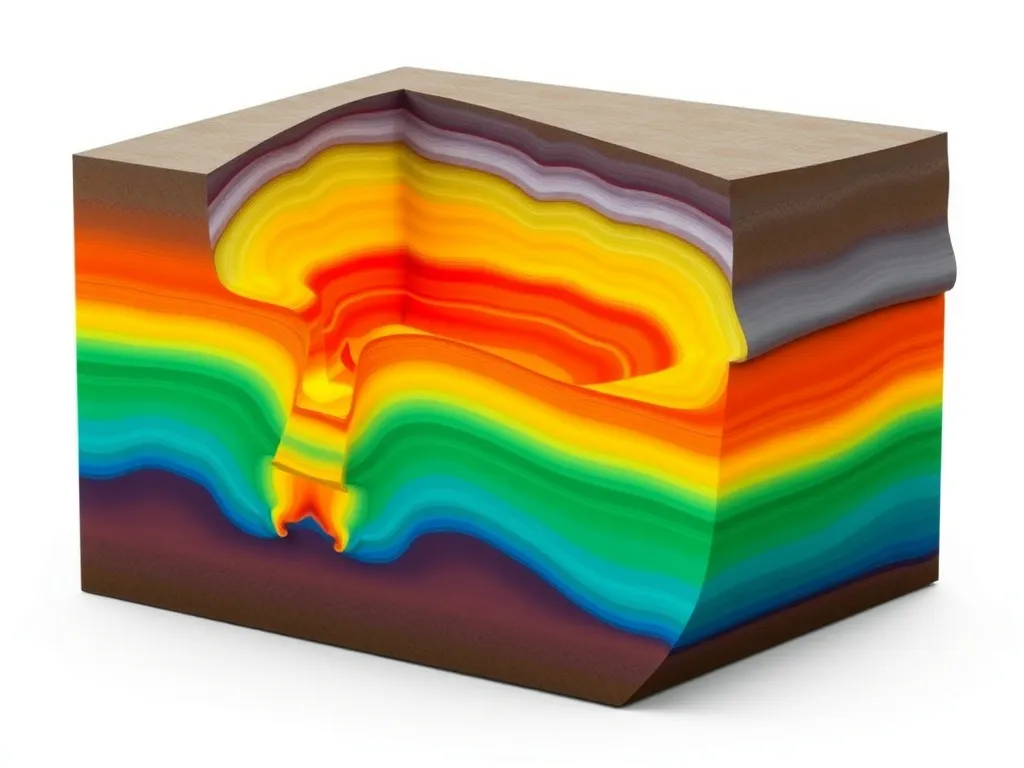
The Significance of Earth’s Crust in Modern Research
Modern geological research increasingly explores the crust for sustainable resource management and hazard mitigation. The wealth of minerals and geothermal energy accessible through crustal studies plays a vital role in global economies and future energy solutions.
“Many of the natural resources humans rely on are products of the Earth’s internal processes.” -simplygeography.com
Investigations into geothermal energy, mineral deposits, and crust dynamics support sustainability while advancing scientific knowledge essential to preserving Earth’s environmental integrity.
Conclusion
Exploring Earth’s crust leads into depths that reveal the planet’s rich history and help guide future planetary stewardship. Understanding these deep-rooted structures equips society to face challenges such as natural disasters and resource management.
Continued exploration—through innovative technologies and interdisciplinary studies—unlocks new answers and opens pathways to sustainable interactions with Earth’s geological features. The study of Earth’s crust is more than an academic pursuit; it is an exploration of the foundational layers of our existence.
Future generations will benefit from this essential knowledge, which supports a balance between development and the preservation of Earth’s remarkable and dynamic geological history.