
Integrating AI in Saudi Water Well Management
Hajjan Drilling Company, a prominent name in the Saudi water well drilling field, is entering its next phase of operational excellence: the integration of Artificial Intelligence (AI). As water resource management becomes more digital, AI provides powerful methods to enhance efficiency and refine how water wells are managed within Saudi Arabia’s unique geological context. This shift aligns with the Kingdom’s Vision 2030 objectives, which emphasize sustainability, innovation, and smart infrastructure. By combining decades of field experience and drilling logs with modern data pipelines and sensors, AI enables decisions that are faster, more consistent, and better informed. It also supports remote operations across vast and hard-to-reach areas, improving safety and responsiveness in daily well management.
Introduction to AI in Water Management
In recent years, AI has evolved from a futuristic concept to a practical tool that is transforming many industries. In water well management, its capabilities include predictive maintenance, real-time monitoring, improved aquifer management, and better resource distribution. These AI-driven improvements can greatly benefit the Kingdom of Saudi Arabia, where effective water management is crucial due to its dry climate and reliance on groundwater resources. Predictive models can signal when pumps, casings, or filtration units may fail, allowing maintenance teams to intervene before costly breakdowns occur. Moreover, AI can assimilate climate variability and seasonal demand fluctuations into operations planning, helping balance extraction rates with aquifer sustainability goals.
Utilizing Local Geological Data with AI
Effective AI integration in water well management relies on the quality and relevance of the data fed into AI systems. Saudi Arabia’s geological data provides a rich source of information essential for AI analysis. Through advanced analytics, AI can recognize patterns in seismic data to forecast aquifer levels, predict water usage trends, and identify potential drilling sites that offer higher yields with lower environmental impact. In addition to seismic and hydrogeological records, AI can process borehole logs, core samples, and geophysical surveys to refine subsurface models. Digitizing legacy field notes and integrating satellite observations—such as gravity anomalies or land surface changes—further enhances model accuracy. With this broader data foundation, AI can map recharge zones, anticipate salinity intrusion, and guide drilling strategies that reduce risk and improve long-term water security.
Current AI Technologies in Water Well Management
AI technologies relevant to water well management include machine learning algorithms, predictive analytics, and IoT-enabled sensors.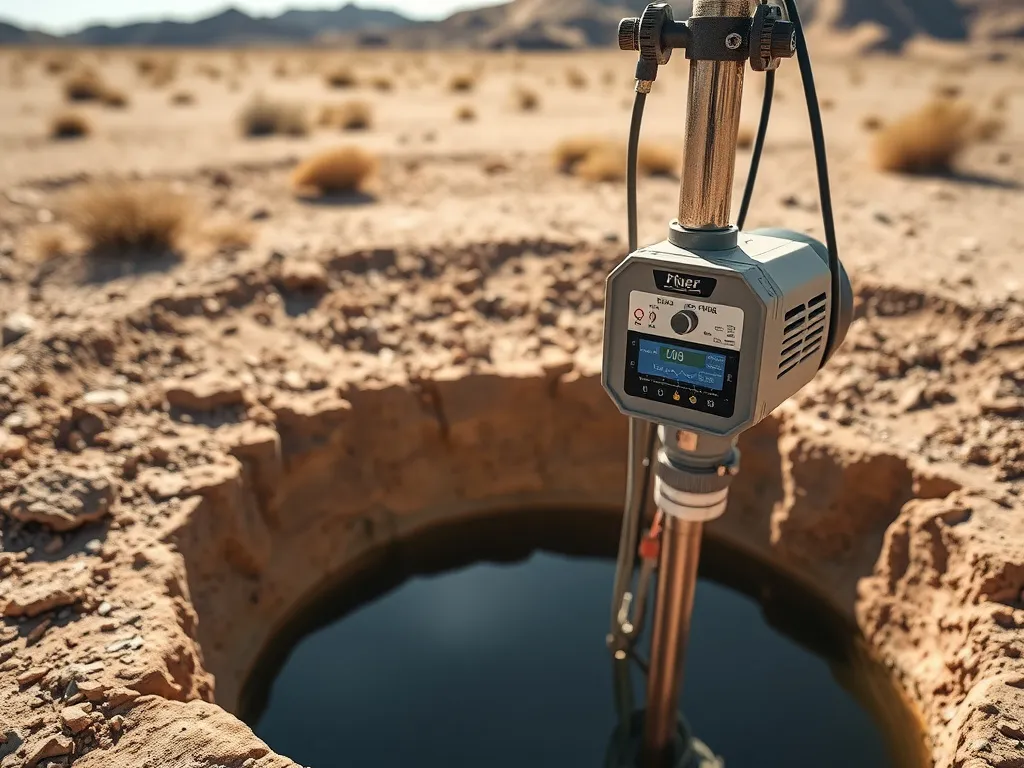 Machine learning models can examine historical data to forecast water demand and establish efficient pumping schedules, reducing water waste. Furthermore, IoT sensors within wells gather real-time data on well conditions and water quality, enabling prompt responses to anomalies and helping extend the lifespan of operations. Advances in edge computing now allow preliminary analytics to run directly at remote sites, reducing latency and dependence on continuous connectivity. Digital twins—virtual representations of wells and aquifers—can simulate different operating scenarios, assisting engineers in choosing optimal settings.
 Combined with vibration analysis and thermal profiling, AI can estimate the remaining useful life of pumps and motors, improving spare parts planning and service logistics.
Case Studies in Similar Climates
The Middle East and North Africa region, which faces climatic challenges similar to those in Saudi Arabia, offers valuable examples of AI’s role in water management. In Tunisia, AI-driven platforms have supported water resource management by forecasting drought conditions, optimizing irrigation schedules, and ensuring consistent water distribution, all by processing and learning from historical climate and geological data. These systems integrate remote sensing with ground observations to deliver guidance to operators and farmers, illustrating how AI can bridge data gaps and enhance decision-making in arid environments.
Another relevant example is in the United Arab Emirates, where AI algorithms were used to optimize desalination plant operations, demonstrating AI’s adaptability to different water management contexts, whether for freshwater aquifers or desalinated resources. By tuning energy consumption and chemical dosing in real time, operators reduced costs while maintaining water quality, a lesson that translates to well fields where pump speeds, runtimes, and treatment steps must be carefully coordinated.
Potential Challenges in Implementation
The path to AI integration in the Saudi water management sector is not without challenges. A primary concern is data security, given the sensitive nature of water resource information. Ensuring strong cybersecurity measures and data privacy protocols will be crucial. Additionally, there is a need for educational initiatives to foster AI literacy among water management professionals, so they can interpret AI insights and make informed decisions based on AI predictions. Establishing clear data governance, interoperability standards, and robust access controls is essential, especially as multiple stakeholders—operators, regulators, and service providers—share information. Finally, model bias and drift must be monitored, ensuring that changing climate patterns or land use do not degrade prediction accuracy over time.
Initial investment in AI technology may also pose a financial challenge. However, the long-term gains in operational efficiency, reduced downtime, and optimized resource distribution position AI as a valuable investment in the Saudi context. Careful total cost of ownership analysis, phased deployments, and the use of modular, scalable platforms can mitigate risk. Exploring subscription models, shared data infrastructures, and targeted pilot projects can help organizations capture early value while building internal capabilities for broader rollouts.
Practical Benefits of AI Integration
Integrating AI into water well management offers practical benefits that align with Saudi Arabia’s vision for sustainable resource management. AI enables more precise control over water extraction, reducing unnecessary depletion of aquifers. Energy use can be minimized by optimizing pump operations based on AI-driven predictions, lowering operational costs and environmental impact. Better control over drawdown rates and rest periods helps protect well integrity, discouraging issues like sand production and premature equipment wear. Over time, operators can calibrate strategies that balance immediate demand with long-term aquifer health, supporting resilience during drought cycles.
Moreover, AI can improve regulatory compliance by continuously monitoring well operations, ensuring adherence to environmental guidelines and operational standards set by Saudi authorities. This direct oversight helps prevent legal and environmental violations, protecting both business interests and ecological health. Automated reporting and alerting simplify audits, while traceable decision logs enhance transparency. In regions with sensitive ecosystems or heritage sites, AI-assisted impact assessments can inform siting and extraction plans that meet both operational needs and conservation priorities.
Solutions for Overcoming Implementation Hurdles
To overcome the initial hurdles of AI integration, Saudi water management entities can explore partnerships with tech firms specializing in AI solutions tailored for arid environments. Pilot projects can help scale AI initiatives gradually while allowing for real-time learning and adjustments. Building shared data platforms and establishing MLOps practices—covering model versioning, testing, and monitoring—will increase reliability and speed of deployment. Hybrid cloud architectures can balance performance with data residency and security requirements, while standardized APIs promote interoperability among existing SCADA and asset management systems.
Government support, in terms of policy and subsidies, can also accelerate AI adoption, as seen in other industrial sectors. Highlighting AI’s role in national water security and environmental sustainability can attract necessary investment and policy changes conducive to AI integration. Regulatory sandboxes could enable controlled experimentation, and public–private partnerships may reduce upfront costs for critical infrastructure. Workforce development programs and university collaborations can cultivate local expertise, ensuring that AI solutions remain aligned with Saudi priorities and operating realities.
Conclusion
AI presents transformative potential for Saudi Arabia’s water well management, promising enhanced efficiency, sustainability, and strategic resource management. By drawing from regional AI successes and tailoring these innovations to its unique environmental and operational challenges, Saudi Arabia can position itself at the forefront of AI-driven water management innovation. Beyond technology, the shift represents a new operating philosophy—data-informed, proactive, and collaborative—capable of adapting to changing climate conditions and rising demand while safeguarding vital groundwater resources.
Hajjan Drilling Company, with its extensive experience and commitment to excellence, is well-poised to lead this charge, ensuring the Kingdom’s water resources are managed with precision and foresight for years to come. By pairing rigorous engineering with advanced analytics, investing in people and partnerships, and maintaining strong governance over data and cybersecurity, the company can build solutions that are dependable, scalable, and responsibly deployed. In doing so, it can help set a standard for the sector and contribute meaningfully to the Kingdom’s long-term water security.